Health-Climate Warning Labels Needed On Hawaii Gas Pumps
It can help shift public attitudes about burning fossil fuels and reaching net-zero emissions goals.
February 16, 2024 · 5 min read

About the Authors


With ground transportation the largest source of greenhouse gasses — GHGs — in Hawaii, it will be everyday Hawaii residents who will make the transition off fossil fuel and convert, permanently, to 100% renewable energy modes of transportation by 2045.

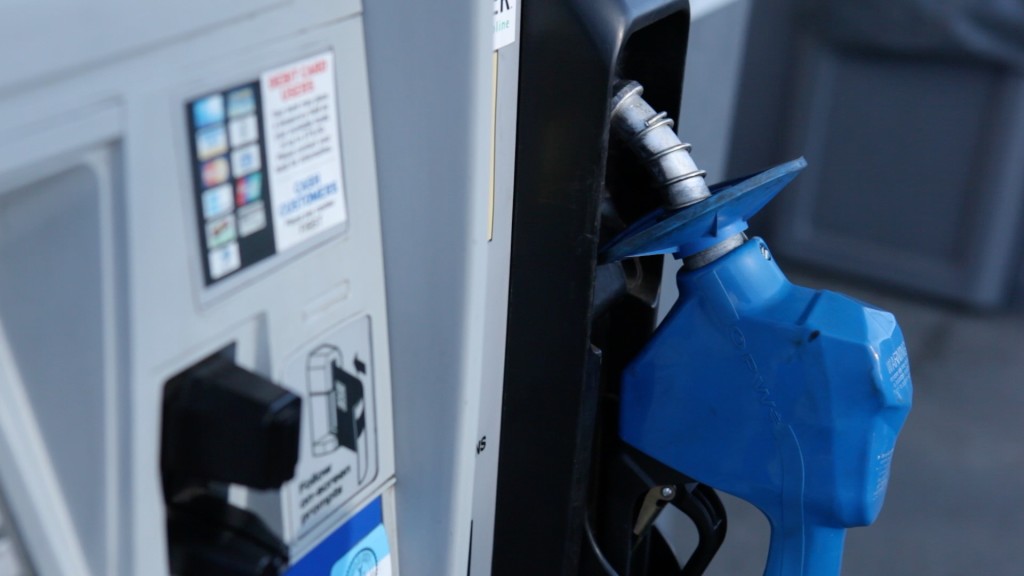
Among many policies needed towards this end, the Hawaii Legislature considered Senate Bill 506 this session, which would require a consumer health-climate warning label be visible on all gas pumps in the state of Hawaii.
Unfortunately, the bill died, but we are hopeful it will be revived next year.
A mandate would follow the city of Cambridge, Mass., which passed the law in 2020, with the Hawaiian “warming labels” likely stating “Burning gasoline, diesel and ethanol has major consequences on human health and on the environment including contributing to climate change.”
The country of Sweden has a similar “eco-label” program for gas pumps, since 2021.
Consumer warning labels are not without controversy. In their research, “The Hidden Success of a Conspicuous Law: Proposition 65 and the Reduction of Toxic Chemical Exposures,” authors Claudia Polsky’s and Megan Schwarzman’s describe California’s Prop 65 labels. In operation since 1987, the law forced companies to disclose carcinogenic materials in everyday consumer products with the aim to reduce exposure.

According to the authors, the regulation challenged deeply held beliefs about government intrusion and the degree to which we are rational, autonomous, free-to-choose individuals.
A review on government-mandated health/climate warning labels on gas pumps conducted by the Hawaii-based nonprofit Think Beyond the Pump, found them to be effective in shifting public attitudes about gasoline and diesel fuel. Strictly speaking, there is a consumer component embedded in Hawaii’s net-zero emissions transportation goals.
A key aspect in transitioning consumers away from conventional fuels and towards choosing non-polluting alternatives, is to make the choice of clean energy more clear-cut. This is especially the case where the average person’s knowledge about the harms caused by fossil fuel burning is low, there are behavioral changes associated with 100% clean energy transportation, and where the need to decarbonize our transportation system is not currently a top priority for most people.
Authors James Brooks and Kristie Ebi found that by increasing public knowledge about the harmful health effects from gas burning in particular, warming labels would motivate people to consider the alternatives to petroleum fuels. When Surgeon General warnings on cigarette packs increased knowledge about specific smoking harms, this became added impetus to the trend of overall reductions in smoking rates in the U.S.
Warming labels as a public health education effort would disrupt demand for gasoline by providing a powerfully up-close and personal, experience of harms generated through our own actions. By providing first-hand learning for what will be for most people new information about the harmful effects from gas burning, the labels would influence individual choices to buy gas by activating existing, mainstream, concerns about the health and climate change associated with continuing fossil fuel use that are already experienced generally.
Repeated exposure could increase the public and political appetite not just for both immediate and long-term emissions reductions, but also for a more aggressive policy stance on “the problem” of gas burning pollution. The labels activating these existing concerns about burning fossil fuel would introduce a new social pressure that gas burning is indefensible since it is linked to human suffering.
A “gas-is-bad” social norm that does not yet currently exist, can more easily accept, sanction, and adopt in permanent ways, new transportation behaviors that would seek to mitigate these harms. In other words, SB 506 could make choosing an EV a healthier choice which aligns with the Hawaii aim for fully electrified transportation.
Secondhand Smoke
With the advent of Surgeon General warnings on cigarettes telegraphing existing concerns about the harmful effects of smoking, smoking in public became socially irresponsible. Cigarette warnings introduced a new social expectation that smokers must protect non-smokers from secondhand smoke.
Since their introduction in 1966, cigarette warnings have come to include both more graphic images but also direct references to the risks of secondhand smoke. The warnings, originally focusing on the harm to users were reframed to include the harm to others.
This is the framing deployed by warming labels: their public health message makes plain that gas burning is harming other people.
The “hidden success” of Prop 65 labels were that they forced companies to warn the public about toxins in their product. The “quiet threat” of the label was simultaneously its most reviled feature and the source of much of its transformative power.
Trying to avoid the Prop 65 label prompted companies to remove potentially carcinogenic materials from their products including Wite-Out, herbicides, and jewelry. Coca-Cola replaced 4-MEI, a potentially toxic ingredient found in caramel coloring, with a less toxic version. Phthalate was removed from toys and childcare products, as was lead in drinking water.
We know that people pay attention to warning labels that have personal relevance.
This is not a complete list. The broad utility of the Prop 65 regulation was that it advanced California’s health-protection goals. The state of Hawaii declared a climate emergency in 2021 but the fuels that drive its largest source of emissions are not sufficiently regulated to protect public interests.
Consumers of fossil fuels need better information than they have currently to advance Hawaii’s net-zero carbon transportation goals. Obviously, the labels won’t stop people from buying gas in the immediate sense, but we know that people pay attention to warning labels that have personal relevance.
By increasing knowledge around already-held concerns about health and climate, the research found warming labels would also increase the belief amongst individual drivers that they are being directly called upon to fix the problem(s) outlined, and through their own actions.
 Sign up for our FREE morning newsletter and face each day more informed.
Community Voices aims to encourage broad discussion on many topics of community interest. It’s kind of a cross between Letters to the Editor and op-eds. This is your space to talk about important issues or interesting people who are making a difference in our world. Column lengths should be no more than 800 words and we need a photo of the author and a bio. We welcome video commentary and other multimedia formats. Send to news@civilbeat.org. The opinions and information expressed in Community Voices are solely those of the authors and not Civil Beat.

Local reporting when you need it most
Support timely, accurate, independent journalism.
Honolulu Civil Beat is a nonprofit organization, and your donation helps us produce local reporting that serves all of Hawaii.
ContributeAbout the Authors